


The former Coles flagship store – 299 Bourke Street, Melbourne
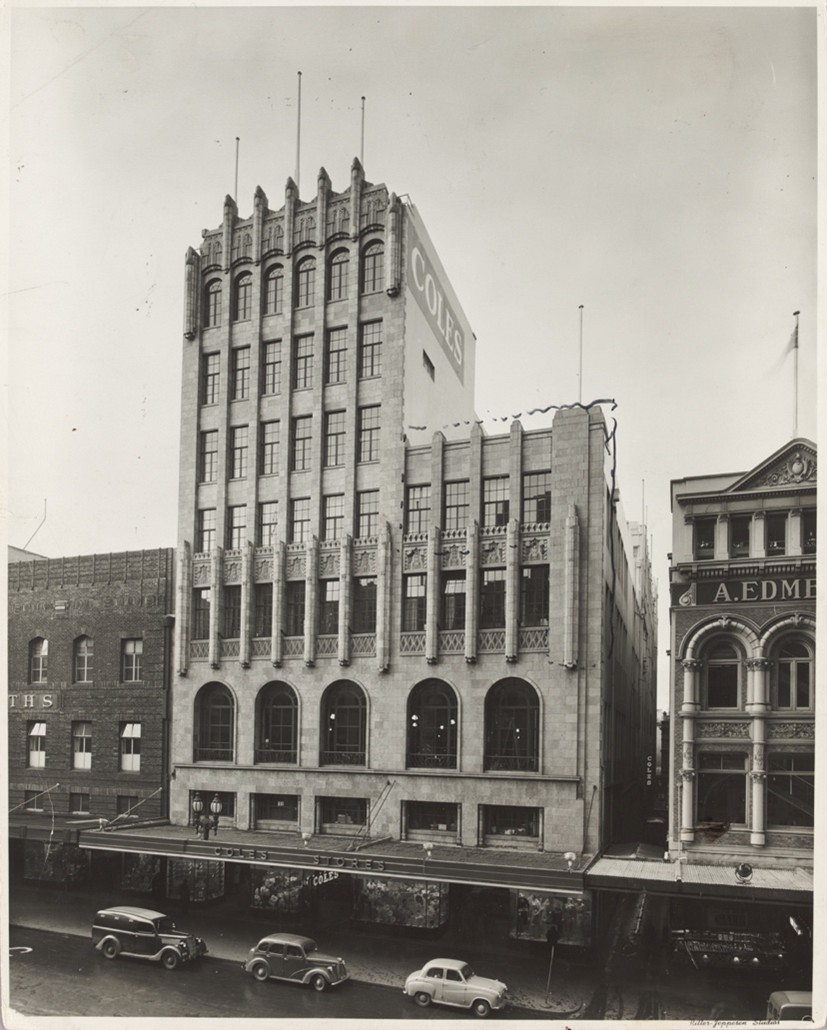
Do you remember shopping at the Coles store at 299 Bourke Street? This building is now part of an amazing new retail development. But it was once home to two of Melbourne’s famous retail empires, GJ Coles & Co (now the Coles Group) and David Jones.
Founded by brothers George, Arthur, Edgar, Kenneth and Norman Coles in Collingwood in 1919, GJ Coles & Co quickly became one of Victoria’s most recognisable retailers. The brothers’ business model was inspired by the American ‘5 and dime’ stores, which offered a wide range of goods at affordable prices. Coles’ slogan, ‘nothing over 2/6’, was known around Australia for many decades.
In 1927, GJ Coles & Co purchased 299 Bourke Street. When the company’s flagship store opened there in 1930, it captured the spirit of modern retailing with eye-catching window displays, sweeping views across the shop floor and a state-of-the-art cafeteria. For many generations of Victorians, Coles was not only the place to shop but also a well-loved meeting place.
The Coles flagship store remained a Bourke Street landmark until its closure on 9 May 1987. The building was later purchased by David Jones, which traded there until 2019. Today, new tenants including MECCA Australia, the Clemenger Group and Rodd & Gunn continue the long retail history of this iconic Melbourne building.
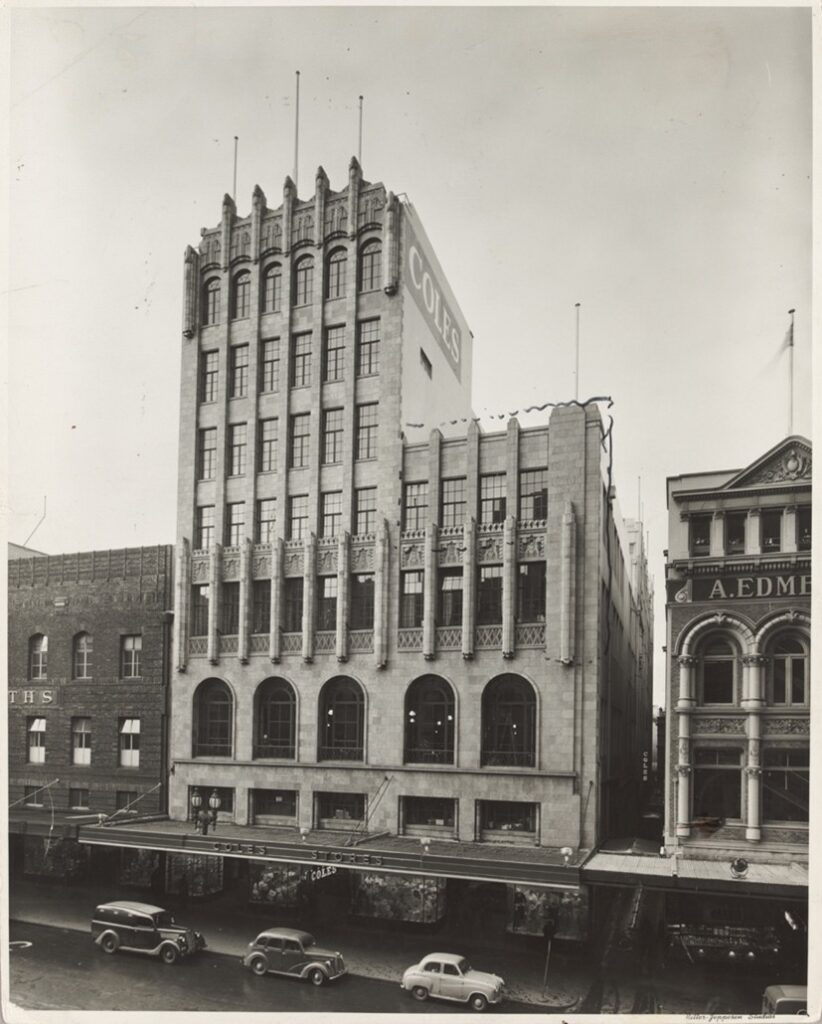
Exterior of the Coles premier store, 299 Bourke Street and Head Office Store No. 12, 1940-50
Coles Myer Ltd, State Library Victoria
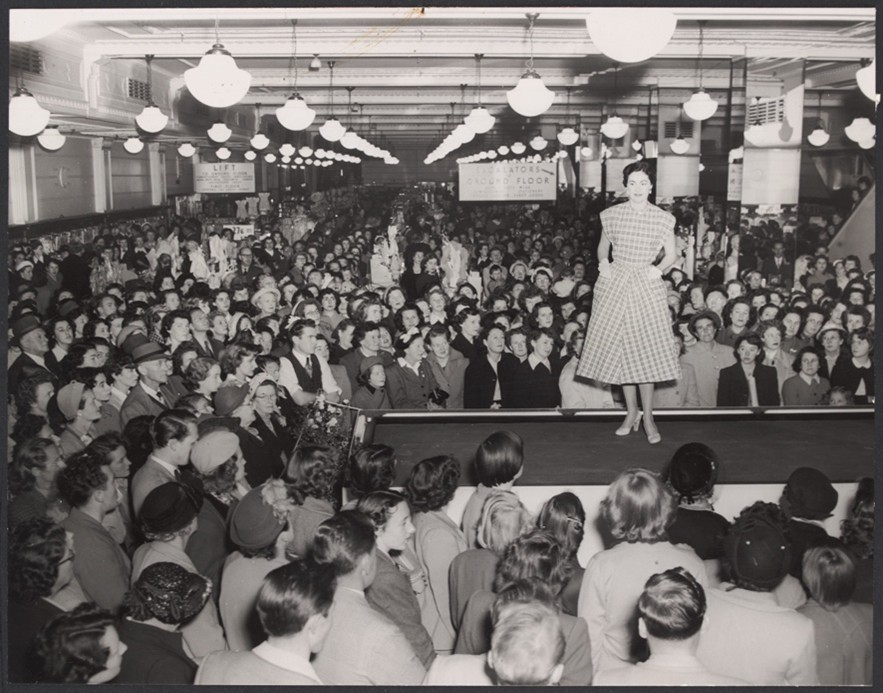
Interior of the Coles Bourke Street store showing a crowd watching a mannequin parade, 1954
Coles Myer Ltd, State Library Victoria
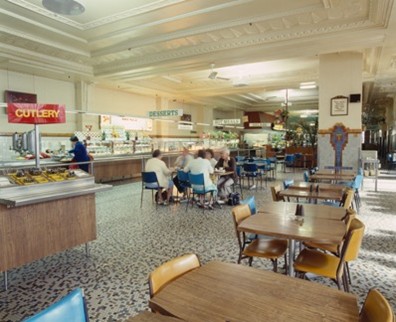
Cafeteria customers and dining areas in Bourke Street Store No. 12, 1987
Coles Myer Ltd, State Library Victoria
Carissa Goudey
Senior Historian, SHP
SHP (Sue Hodges Productions Pty Ltd)
www.shp.net.au
info@shp.net.au
03 9681 8088
0411 336 902

